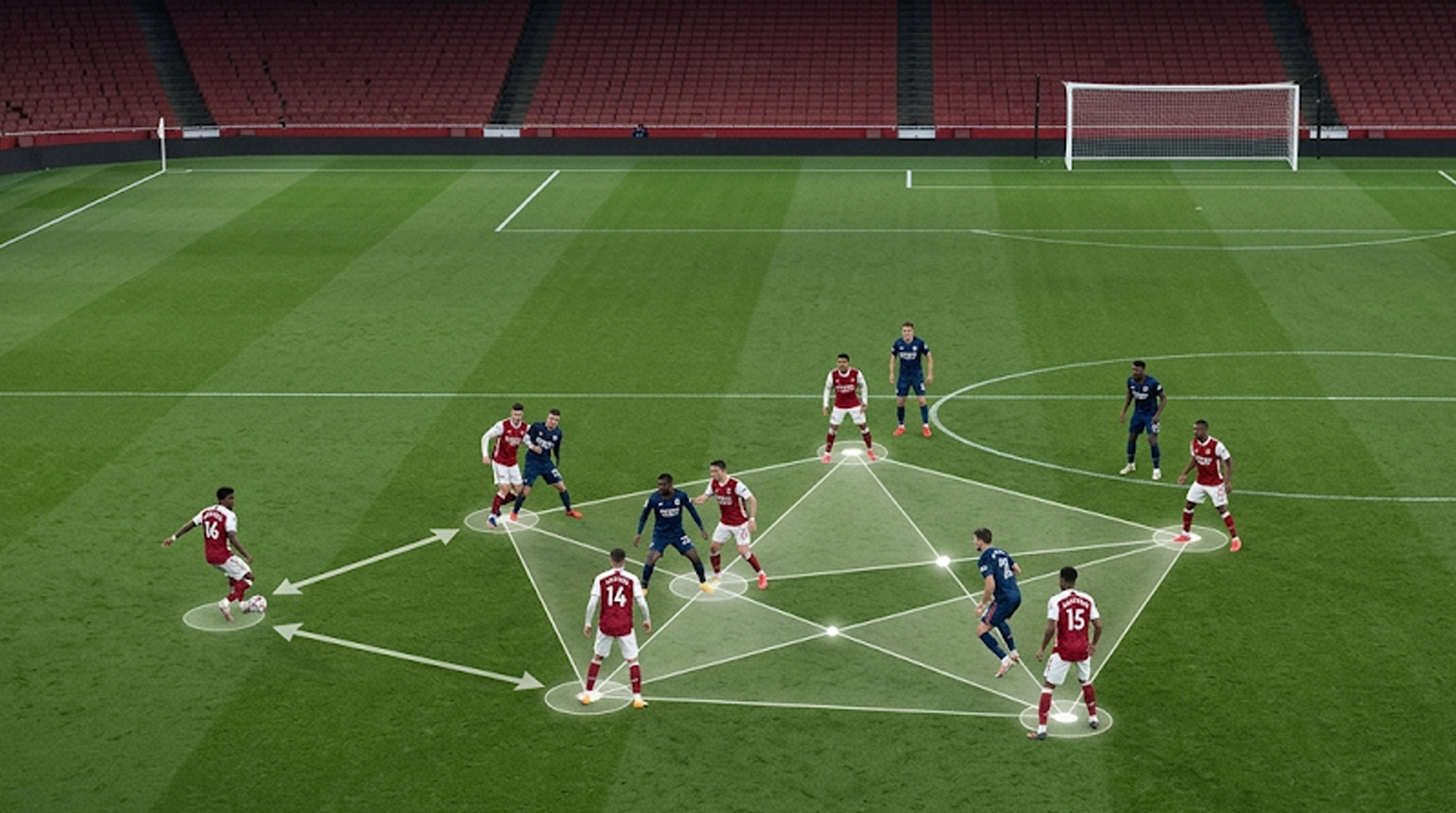
How Inverted Full-Backs Redesigned Premier League Build-Up
Modern football is no longer just a physical contest; it is a battle of structural geometry where space is the most valuable commodity. Fans often wonder why traditional wide play has been abandoned in favor of seemingly congested central areas. This tactical evolution directly answers the aggressive high-pressing systems that have recently dominated the sport. We are going to decode the inverted full-back, a brilliant tactical blueprint that overloads the midfield channels and completely dismantles conventional defensive structures.
Drafting the High-Density Midfield Block
Historically, full-backs hugged the touchline to stretch the opponent and maximize the team’s horizontal spatial footprint. The modern inverted full-back flips this logic, deliberately stepping inside to create a high-density midfield block during the build-up phase. This tactical shift functions much like a high Floor Area Ratio (FAR) strategy in urban development, aggressively maximizing the utility and control of the most valuable central zones. By positioning an extra body alongside the defensive midfielder, possession-heavy teams establish a numerical superiority that overwhelms the opposition.
This sudden influx of central players forces defending wingers to make impossible choices in a fraction of a second. If they track the inverting full-back inside, they surrender massive space on the flanks for advancing wingers to exploit. If they stay wide, the midfield is mathematically overrun by the attacking side’s numerical advantage. It is a seamless tactical workflow that turns a flat backline into a dynamic, multi-layered attacking engine.
The Structural Geometry of Central Overloads
To truly appreciate this tactical revolution, we must explore the structural geometry and complex environmental interactions occurring on the pitch. When a full-back inverts, the team’s shape morphs into a resilient 3-2-5 formation, creating interconnected passing triangles that resemble a highly stable Platonic solid. For a deeper visual breakdown of these shifting spatial relationships and passing nodes, you can examine the specific diagrams in ref.pdf. This calculated geometric rigidity allows teams to trap opponents in the center while maintaining absolute possession of the ball.
Perfecting this system requires immense tactical intelligence and an environment entirely dedicated to building foundational fitness. Mikel Arteta is meticulously refining these spatial relationships at London Colney, where he recently watched a mix-and-match Arsenal side beat MK Dons 3-0. The seamless integration of these complex movements was evident when new arrival Christos Tzolis immediately set up Reiss Nelson for the opening goal.
Sustaining this intense tactical lifecycle requires a constant influx of energetic players who inherently understand the system’s geometric demands. Returning loanees like Ethan Nwaneri, who doubled the lead before half-time in that match, prove that investing in youth is critical to executing these demanding central overloads. Integrating newly signed Academy graduates like Remi Lupinski and Callan Hamill ensures the club’s structural blueprint remains robust for the future.
The Enduring Blueprint of Modern Build-Up
The inverted full-back is far more than a passing trend; it is a permanent architectural shift in how elite teams construct their attacking phases. By manipulating spatial footprints and creating high-density central overloads, modern managers can completely dictate the rhythm and geography of a match.
How do you think traditional defensive structures will evolve to counter these complex midfield overloads? Share your tactical theories in the comments below, and subscribe to our newsletter for more deep dives into football’s strategic innovations!
Leave a Reply