Tag: All That Highbury

  • Arsenal vs Coventry City: How the Champions Kicked Off 2026 With a Tactical Masterclass

    The 2026/27 Premier League season is officially underway, and Arsenal has immediately reminded the world why they are the defending champions. Fans and pundits alike were eager to see if Mikel Arteta’s squad could maintain their relentless momentum against a newly promoted Coventry City. The definitive 3-0 victory at the Emirates Stadium answered that question with resounding authority. We will explore the tactical foundations of this opening win and how early pre-season preparations directly influenced their dominant performance on the pitch.

    Building the Tactical Foundation

    Arsenal’s commanding display against Coventry City did not materialize out of thin air. The groundwork for this fluid, attacking style was carefully laid during their summer fixtures. Arteta utilized the off-season to integrate new talent and experiment with squad depth, ensuring that the team was firing on all cylinders by August. The blend of seasoned veterans and hungry prospects created a dynamic environment that Coventry simply could not handle.

    This early synergy was evident weeks ago when a mix-and-match Arsenal side confidently beat MK Dons 3-0 in their first pre-season outing. During that match, new arrivals like Christos Tzolis and Illan Meslier made immediate impressions, with Tzolis seamlessly setting up the opening goal for Reiss Nelson. Ethan Nwaneri and 18-year-old Ceadach O’Neill also found the back of the net, proving that the squad possesses depth across all positions. That same organized, ruthless efficiency was on full display as they dismantled Coventry’s defensive lines.  

    Deconstructing the Coventry City Challenge

    Facing a newly promoted side on the opening night presents a unique set of challenges. Coventry City arrived at the Emirates with nothing to lose and a defensive block designed to frustrate the champions. However, Arsenal’s ability to manipulate space and recycle possession quickly neutralized any threat of a counter-attack. The midfield pivot operated flawlessly, dictating the tempo and forcing Coventry to chase shadows for the majority of the ninety minutes.

    The deeper nuances of Arsenal’s strategy rely on relentless high pressing and fluid positional interchanges. By constantly rotating their attacking personnel, the Gunners created structural overloads that pulled Coventry’s defenders out of their preferred zones. This tactical maturity allowed Arsenal to comfortably secure three goals while simultaneously registering a vital clean sheet. It is this combination of lethal finishing and impenetrable defensive structure that makes a consecutive title run look incredibly promising.
  • Arsenal vs. Manchester City Today

    The Modern Premier League Clash

    Are you ready for the ultimate tactical showdown that defines modern English football? Today, two titans collide in a high-stakes battle of strategic mastery, squad depth, and sheer determination. This breakdown explores the evolving rivalry between Arsenal and Manchester City, examines their recent form and preparations leading into the game, and analyzes what this monumental fixture means for the season ahead.

    The Foundation of a Modern Football Rivalry

    The rivalry between North London and Manchester has evolved into the most compelling chess match in world sport. Over recent campaigns, the dynamic between Mikel Arteta and Pep Guardiola has shifted from a teacher-student narrative into a fierce fight for domestic supremacy. Every encounter tests psychological endurance and structural discipline, setting the benchmark for high-level tactical execution.

    Building up to this clash requires relentless physical conditioning and acute tactical refinement. Arsenal prepared for this high-profile fixture with intensive warm-up fixtures across Europe, testing squad combinations against continental competition before locking horns with Manchester City on August 16. The foundational work laid during these summer preparations now faces its definitive test under the brightest spotlight.  

    Tactical Evolutions, Fresh Talent, and Game Dynamics

    Integrating new talent while maintaining fluid tactical structures is the deciding factor in modern marquee matchups. Arsenal showcased their tactical depth earlier in pre-season when new signings like Christos Tzolis and Illan Meslier stepped into the fold, with Tzolis instantly providing an assist in a 3-0 victory against MK Dons. Integrating fresh personnel alongside proven match-winners provides managers with the flexibility needed to unlock disciplined, low-block defensive setups or counter relentless pressing.  

    Manchester City continues to push the boundaries of positional play, demanding absolute spatial awareness and precision from every player on the pitch. Winning this matchup requires neutralizing central passing lanes, exploiting transitions at breakneck speed, and capitalizing on dead-ball scenarios. The team that manages game phases with greater poise and minimizes structural errors in transition will inevitably seize control of the contest.

  • The Legacy of Dennis Bergkamp

    The Legacy of Dennis Bergkamp

    How the Dutch Maestro Revolutionized Modern Football

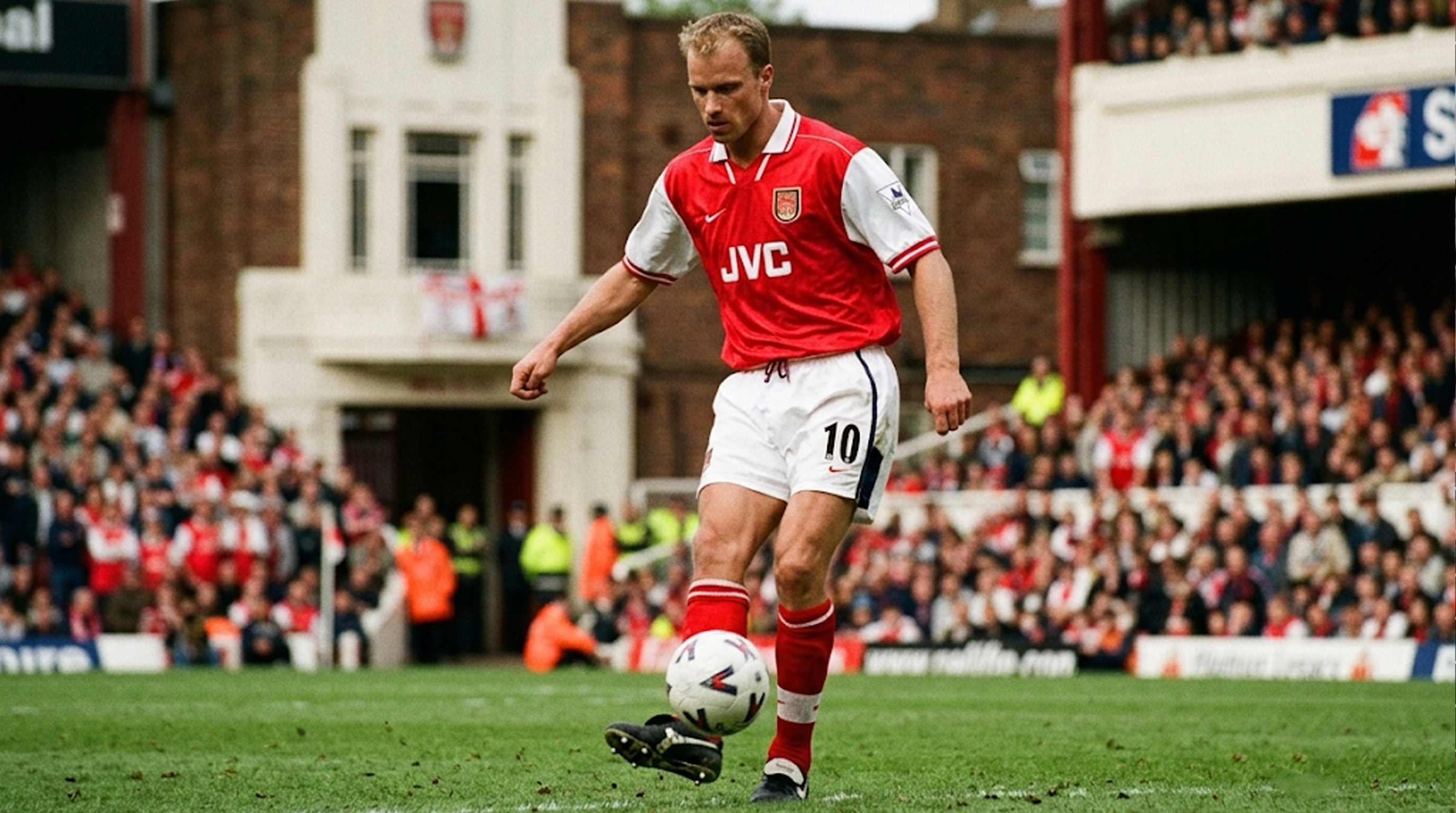
    When Dennis Bergkamp arrived at Highbury in 1995, English football was largely characterized by physical battles, long balls, and rigid tactical setups. The Dutch forward did not just adapt to the Premier League; he fundamentally redefined how the game was played in England. His signing served as the catalyst for Arsenal’s golden era, bridging the gap between traditional British football and the sophisticated, fluid style that would dominate the modern game.

    Understanding Bergkamp’s impact requires looking beyond basic statistics to examine his technical mastery, spatial intelligence, and lasting influence on attacking play.

    Technical Perfection and Spatial Intelligence

    Bergkamp operated in the traditional second-striker role, but his interpretation of the position was entirely revolutionary. He possessed an extraordinary ability to process spatial geometry on the pitch, identifying passing lanes and half-spaces long before defenders could react. His iconic goal against Newcastle in 2002 remains the ultimate embodiment of his genius. By flicking the ball with one touch around Nikos Dabizas while turning in the opposite direction, Bergkamp demonstrated an unprecedented level of spatial awareness and delicate ball manipulation.

    His philosophy centered on absolute efficiency. Every touch had a clear purpose, whether it was to eliminate a defender, slow down the tempo to let teammates join the attack, or weight a pass into space with millimeter precision. Under the guidance of Arsène Wenger, Bergkamp became the focal point of a team that won three Premier League titles and four FA Cups, including the historic undefeated “Invincibles” season of 2003-04.

    The Modern Blueprint for the Deep-Lying Playmaker

    Beyond his individual brilliance, Bergkamp established the modern blueprint for how central attacking midfielders and deep-lying playmakers operate today. Before his arrival, foreign creative players often struggled with the physicality of the English game. Bergkamp proved that elite technique, coupled with sharp tactical intellect, could dismantle even the most aggressive low-block defenses. He elevated the performances of those around him, serving as the primary playmaker for high-scoring teammates like Ian Wright and Thierry Henry.

    His influence extends directly into modern tactical systems. Today’s emphasis on positional fluidity, half-space utilization, and attacking transition speed traces its lineage back to the patterns Bergkamp established at Highbury. He proved that elegance and brutal competitive efficiency could coexist at the highest level of European football.

  • The Highbury Legacy vs. The Emirates Era

    The Highbury Legacy vs. The Emirates Era

    How Arsenal’s Tactical Identity Evolved

    The transition from Highbury to the Emirates Stadium represents far more than a simple change of address in North London. It marks a fundamental shift in how Arsenal conceives, constructs, and executes its footballing strategy on the pitch. While fans often romanticize the intoxicating flair of the early Arsène Wenger years, Mikel Arteta has methodically crafted a modern tactical machine built on control and geometric discipline. Understanding this evolution reveals how spatial dynamics and squad philosophy have continuously reshaped one of football’s most iconic institutions.

    From Highbury’s Intimate Fluidity to Modern Spatial Geometry

    Highbury’s compact dimensions naturally fostered an environment of high-speed technical combination play. Arsène Wenger capitalized on these tight spatial boundaries by encouraging absolute expressive freedom, allowing legendary figures like Thierry Henry and Robert Pires to drift seamlessly across central and wide zones. The football was inherently instinctual, relying on the telepathic understanding between world-class athletes rather than rigid positional guidelines. Players occupied spaces reactively, creating an unpredictable, counter-attacking juggernaut that dynamic teams struggled to contain.

    The move to the sprawling, expansive pitch at the Emirates Stadium exposed the limitations of relying purely on intuitive movement. Opponents quickly learned that deep defensive blocks could exploit the added width and length, neutering Arsenal’s quick interchange play. As European football evolved toward structured pressing and strict tactical discipline, the Gunners’ romanticized fluidity began to yield diminishing returns, eventually necessitating a complete philosophical overhaul at the managerial level.

    Mikel Arteta’s Positional Play and Strategic Evolution

    Under Mikel Arteta, Arsenal has embraced Juego de Posición, or Positional Play, transforming the team into a masterclass of spatial control. Rather than allowing players to move freely based on instinct, Arteta assigns strict zone-based responsibilities designed to manipulate the opponent’s defensive structure. The pitch is mapped out into explicit corridors, ensuring that when an inverted fullback moves into the central midfield channel, a wide winger simultaneously pins the opposition fullback to maintain optimal numerical advantages.

    This structural evolution prioritizes risk mitigation and sustained territorial dominance over sheer counter-attacking speed. By maintaining meticulous distance between positions, the current squad minimizes turnovers in dangerous areas and sets up instant counter-pressing traps when possession is lost. The transition from Wenger’s artistic improvisation to Arteta’s calculated geometry reflects the broader macro-trends of contemporary elite football, proving that modern dominance requires absolute structural authority.