Category: Arsenal Stories

  • Modern Transfer Economics

    Modern Transfer Economics

    How Financial Rules Are Rewriting the Football Playbook

  • The Highbury Heritage

    The Highbury Heritage

    How Arsenal’s Architectural Masterpiece Forged a Footballing Identity

    Most football stadiums are simply functional concrete vessels designed to maximize ticket sales, but a rare few become the beating heart of a community. How does a physical structure embed itself so deeply into a sports brand that its legacy survives long after the gates are locked? As modern clubs rapidly commercialize, maintaining a distinctive cultural soul is becoming an immense challenge for global sports organizations. This exploration delves into the defining architectural features of Highbury Stadium, revealing how its intimate spatial geometry and iconic design permanently shaped Arsenal’s modern identity.

    The Art Deco Foundation: Designing the Arsenal Way

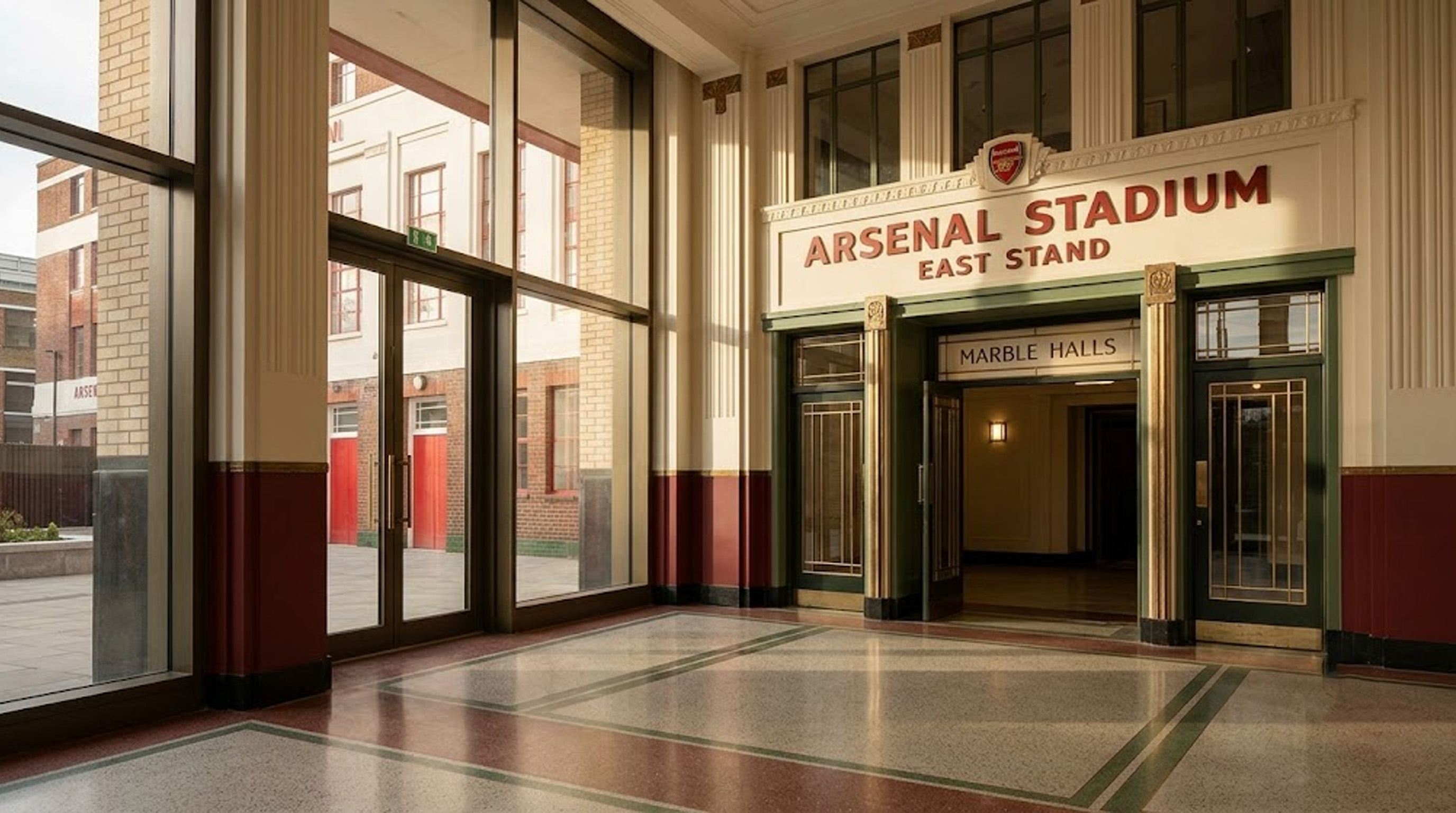
    Highbury was far more than a pitch; it was a pioneering statement of intent designed by architect Claude Waterlow Ferrier in the 1930s. The East and West Stands utilized striking Art Deco facades that instantly elevated the club’s aesthetic above traditional sporting venues of the era. This design choice introduced a level of sophistication, famously characterized by the iconic marble halls and underfloor heating. It visually communicated a philosophy of class and forward-thinking innovation that the club still fiercely protects today.

    The stadium’s physical footprint was notoriously compact, creating an incredibly intimate atmosphere that defined the matchday experience. Fans were positioned dangerously close to the touchline, turning the venue into a high-pressure cauldron for visiting teams. This proximity forged an intense psychological bond between the supporters and the players on the pitch. Such architectural intimacy ultimately birthed the club’s identity as a deeply unified community, a trait that remains central to their global brand appeal.

    Structural Geometry and the Lifecycle of a Landmark

    To truly appreciate Highbury, we must explore the structural geometry and material lifecycles involved in its construction and subsequent transformation. The original stands were engineered with steep, tight angles that functioned as an acoustic chamber, trapping crowd noise and projecting it directly onto the playing surface. When the club inevitably outgrew the venue, the architectural integrity of Ferrier’s vision prevented a simple demolition. Instead, the site underwent a fascinating successional ecology, transitioning from a historic sports arena into high-density urban housing known as Highbury Square.

    This adaptive reuse preserved the structural geometry of the exterior walls, allowing the material lifecycle of the stadium to continue rather than end in a landfill. The pitch itself was transformed into a communal garden, maintaining the spatial footprint of the historic playing surface for new residents. For a deeper technical breakdown of how historic materials can be preserved in modern urban planning, you can review the detailed diagrams in ref.pdf. Even as Mikel Arteta oversees a new mix-and-match Arsenal side at London Colney, the cultural weight of Highbury’s architecture continues to anchor the club’s modern ambitions. The current focus on building fitness and integrating Academy prospects into the first team reflects the same foundational stability that the old stadium represented.

    The Enduring Blueprint of Highbury

    Highbury Stadium proves that architectural design is not just a passive backdrop for sports, but an active participant in building a brand’s cultural identity. Its transition into high-density housing highlights a brilliant lifecycle adaptation that honors its Art Deco structural geometry. Ultimately, the spirit of those iconic marble halls continues to influence Arsenal’s trajectory both on and off the pitch.

    What architectural features do you think are missing from modern mega-stadiums today? Drop your thoughts in the comments below and share this article with your fellow football and design enthusiasts!

  • North London’s Global Reach

    North London’s Global Reach

    How Arsenal Built One of Football’s Most Passionate Worldwide Fanbases

  • From Hale End to the World

    From Hale End to the World

    What Makes Arsenal’s Youth Academy a Global Gold Standard?

    For decades, football clubs across the globe have spent hundreds of millions of pounds attempting to buy success on the transfer market. Yet, the most sustainable pathway to domestic dominance and international acclaim often lies within a club’s own backyard. Located in Walthamstow, North East London, Arsenal’s Hale End Academy has evolved from a local talent incubator into an elite production facility for world-class talent. Modern superstars like Bukayo Saka, along with rising stars Ethan Nwaneri and Myles Lewis-Skelly, prove that Arsenal’s youth infrastructure is setting a new benchmark for global football development.

    The challenge facing elite European football clubs today is twofold: identifying rare talent at a young age and providing a clear, structural bridge to top-flight first-team football. Many academies generate skilled athletes, but few successfully transition teenagers into starting roles in high-stakes environments like the Premier League and UEFA Champions League. This article analyzes the strategic, psychological, and analytical framework that makes Arsenal’s Hale End system the global gold standard in youth development.

    Local Roots and Hyper-Targeted Scouting Operations

    The bedrock of Arsenal’s youth success begins with an intentional focus on hyper-local talent identification. Rather than relying solely on global scouting networks for young prospects, Hale End concentrates heavily on Greater London, a region recognized as one of the most talent-dense football ecosystems in the world. By securing commitments from top local players as early as age eight, the club establishes a deep, early alignment with both the player and their family.

    This local foundation is supported by an aggressive, highly analytical recruitment apparatus that tracks physical, technical, and cognitive growth milestones. Arsenal’s talent identification strategy combines advanced biomechanical tracking with qualitative assessments of spatial awareness and decision-making under pressure. By filtering prospective players through these rigorous standards, Hale End ensures that every athlete admitted into the system possesses the baseline attributes required for modern high-intensity football.

    Additionally, the physical environment at Hale End is deliberately designed to instill humility alongside elite performance standards. The facility features an “Academy Debutants Board” filled with gold plaques honoring every graduate who has made a senior first-team appearance. This visual history connects young prospects to legendary figures like Tony Adams, Cesc Fàbregas, and Ashley Cole, creating an unbroken tradition of excellence.

    The true differentiator of the Hale End model is the seamless tactical and operational alignment between the youth setup and Mikel Arteta’s senior squad. Under Academy Director Per Mertesacker, Arsenal restructured its curriculum so that academy teams mirror the exact tactical principles, positional rotations, and press-resistant philosophies executed by the first team. When an academy player is called up to train at London Colney, the tactical language remains identical, eliminating the friction usually associated with stepping up to senior football.

    To prepare young players for the demands of professional competition, Arsenal frequently drafts academy prospects into senior training sessions to simulate upcoming opponents. This direct exposure builds physical resilience and accelerates decision-making speed. Mentorship plays a crucial role as well; established academy graduates like Bukayo Saka serve as direct role models, demonstrating the exact path from youth prospect to international star.

    Furthermore, Arsenal prioritizes mental resilience and holistic character development alongside tactical training. The club invests in full educational scholarship packages at top academic institutions to ensure off-pitch balance and intellectual maturity. This comprehensive support system builds emotionally grounded athletes who remain calm and composed when thrust into high-pressure environments.

  • The North London Derby Effect

    The North London Derby Effect

  • The Arsenal Invincibles vs. Modern Giants

    The Arsenal Invincibles vs. Modern Giants